YouTube Review Features, Pricing, Pros & Cons
YouTube has become more than just a video-sharing platform—it’s a global cultural force. With over 2.5 billion monthly active users, it’s the go-to destination for everything from how-to tutorials and entertainment to education and breaking news.
Whether you’re a content creator trying to monetize your passions, a brand seeking visibility, or a viewer looking for your next binge-worthy playlist, YouTube delivers.
But behind its massive scale lies a sophisticated ecosystem of tools, features, and monetization options that continue to evolve.
In this in-depth review, we’ll explore what makes YouTube the world’s leading video platform, who it’s for, what you can expect in terms of features and experience, how much it costs, and what alternatives you might consider.
Company Background
YouTube was founded in February 2005 by Steve Chen, Chad Hurley, and Jawed Karim—three former PayPal employees—with the idea of creating a platform where anyone could upload and share video content. The first video ever uploaded, “Me at the zoo,” still lives on the site today.
In November 2006, just over a year after its launch, Google acquired YouTube for $1.65 billion in stock. Since then, YouTube has expanded into mobile, smart TVs, live streaming, music, education, and gaming. It operates under Google’s parent company, Alphabet Inc., and is headquartered in San Bruno, California.
As of today, YouTube is one of the most visited websites globally and is the second-largest search engine after Google. It has transformed into a full-fledged media platform supporting millions of creators and businesses.
Website: https://www.youtube.com
Key Features
YouTube’s versatility is what makes it stand out. Here’s a breakdown of its most powerful features:
Content Creation and Formats
| Feature | Description |
|---|---|
| Long-form videos | Traditional uploads ranging from minutes to several hours. |
| YouTube Shorts | Vertical videos under 60 seconds, designed to compete with TikTok and Reels. |
| Live streaming | Real-time broadcasting with chat and monetization options. |
| Playables | Interactive mini-games that can be played within YouTube’s ecosystem. |
These content formats allow creators to diversify their output and engage different audience segments.
Monetization & Creator Tools
| Tool | Benefit |
|---|---|
| AdSense integration | Monetize views via ads; revenue sharing model. |
| Channel memberships | Offer exclusive perks for subscribers via monthly fees. |
| Super Chat & Stickers | Fans pay to highlight their messages during live streams. |
| YouTube BrandConnect | Connects influencers with brands for paid partnerships. |
| Shopping integration | Sell merchandise directly from video pages. |
Creators can monetize in multiple ways, turning passion projects into full-time careers.
Discovery and Personalization
YouTube’s algorithm is arguably its most powerful weapon. It uses deep-learning recommendation systems to:
- Suggest personalized content
- Prioritize engaging videos
- Promote trending or localized videos
With features like auto-dubbing and multi-language support, creators can reach global audiences more easily.
Premium and Add-On Services
| Service | Key Features |
|---|---|
| YouTube Premium | Ad-free, background play, video downloads, and access to YouTube Music. |
| Premium Lite | Ad-free experience only, no background play or downloads. |
| YouTube Music | Standalone music streaming app with vast library and curated playlists. |
| YouTube Kids | A family-friendly version of YouTube with age-appropriate content. |
| YouTube TV | Live TV streaming with cloud DVR and access to 100+ channels (US only). |
These services create a seamless content experience across different use cases.
Policy and Moderation
- Content ID: Automatically detects copyrighted material.
- Community Guidelines: Strict rules around hate speech, misinformation, and harmful content.
- Moderation Tools: Comments filtering, restricted mode, and more to help maintain platform integrity.
User Interface and Experience (UI/UX)
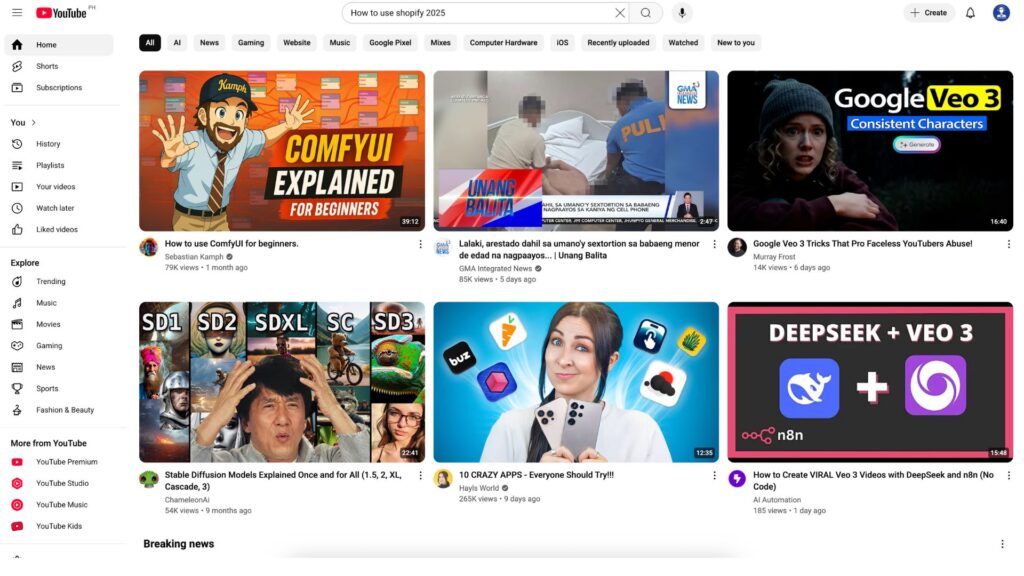
YouTube’s design is clean and highly intuitive. The homepage showcases personalized recommendations, trending videos, Shorts, and subscriptions in neatly categorized sections.
- Dashboard for Creators: YouTube Studio offers analytics, monetization controls, comment moderation, and editing tools—all in one place.
- Mobile Experience: The YouTube app for iOS and Android is smooth and responsive, with dedicated tabs for Shorts, Live, and Subscriptions.
- Shorts Interface: Vertical full-screen video browsing optimized for mobile, similar to TikTok.
- Accessibility: Offers auto-captioning, screen reader support, and high-contrast modes.
The onboarding process is beginner-friendly. Signing up and uploading a video takes just minutes.
Platforms Supported
| Platform | Availability |
|---|---|
| Web | Available on all browsers |
| Mobile App | Android, iOS |
| Smart TVs | Built-in apps for Roku, Apple TV, etc. |
| VR | YouTube VR for Oculus and other headsets |
YouTube is entirely cloud-based. Videos are streamed online, and some Premium features allow for offline viewing.
Pricing
| Plan | Price | Features |
|---|---|---|
| Free | $0 | Ad-supported access to all features |
| YouTube Premium | $11.99/month | Ad-free, background play, video downloads, YouTube Music |
| Premium Lite | €7.99/month (EU) | Ad-free only, no background play or downloads |
| YouTube Music | $9.99/month | Music streaming without ads |
| YouTube TV | Starts at $72.99/mo | Live TV with 100+ channels, DVR, available in the US |
Free trials are available for Premium and Music. Discounts for students and family plans are also offered.
Pros and Cons
Pros
- Massive Global Audience – Reach billions of users across countries and devices.
- Robust Monetization Tools – Multiple income streams for creators.
- Powerful Discovery Engine – AI-driven suggestions that increase content exposure.
Cons
- Heavy Ad Saturation – Free version has increasingly frequent ads.
- Algorithm Dependency – Creators often struggle with visibility due to changes in recommendation models.
- Complex Policy Enforcement – Content removals and strikes can be inconsistent and difficult to appeal.
Customer Support and Resources
YouTube offers a solid support ecosystem:
- Help Center: Extensive documentation and troubleshooting guides.
- YouTube Creator Academy: Free training on content creation, growth, and monetization.
- Community Forum: Interact with other users for problem-solving.
- Email Support: Available for creators who meet certain thresholds.
- YouTube Blog: Regular updates on features and platform direction.
However, real-time support is limited and not available to all users.
Real-World Use Cases / Ideal Users
Educators and Online Teachers
Many instructors use YouTube to deliver lessons, tutorials, or educational series. The platform supports playlists and closed captions, which makes it ideal for structured learning.
Small Businesses and Entrepreneurs
Brands use YouTube for product launches, behind-the-scenes footage, and customer stories. With the ability to link to external sites and integrate merchandise, it becomes a direct sales and awareness channel.
Influencers and Creators
From vloggers and gamers to beauty experts and travel enthusiasts, YouTube offers the tools to build, scale, and monetize their audience.
Musicians and Performers
YouTube Music and regular video uploads provide a dual-platform exposure. Live performances and music videos boost engagement.
Families
YouTube Kids creates a safe environment for children, while parents can also enjoy general content or YouTube Premium’s family plan.
User Reviews and Ratings
| Platform | Average Rating |
|---|---|
| G2 | 4.6/5 |
| Trustpilot | 3.8/5 |
| Capterra | 4.5/5 |
User Highlights:
“As a content creator, YouTube is unmatched in reach and monetization.” — Rachel M., G2
“The constant algorithm changes are a nightmare for small channels.” — Ben A., Capterra
“Love the Premium experience. Worth every penny to skip the ads.” — Danielle S., Trustpilot
Best Alternatives
| Alternative | Best For |
|---|---|
| Vimeo | Professional hosting, no ads, cleaner player |
| Twitch | Live streaming, especially for gamers |
| TikTok | Short-form mobile-first video |
| Dailymotion | Small-scale sharing with fewer restrictions |
| Facebook Watch | Social video discovery |
Each platform offers unique strengths, but none match YouTube’s comprehensive ecosystem.
Summary
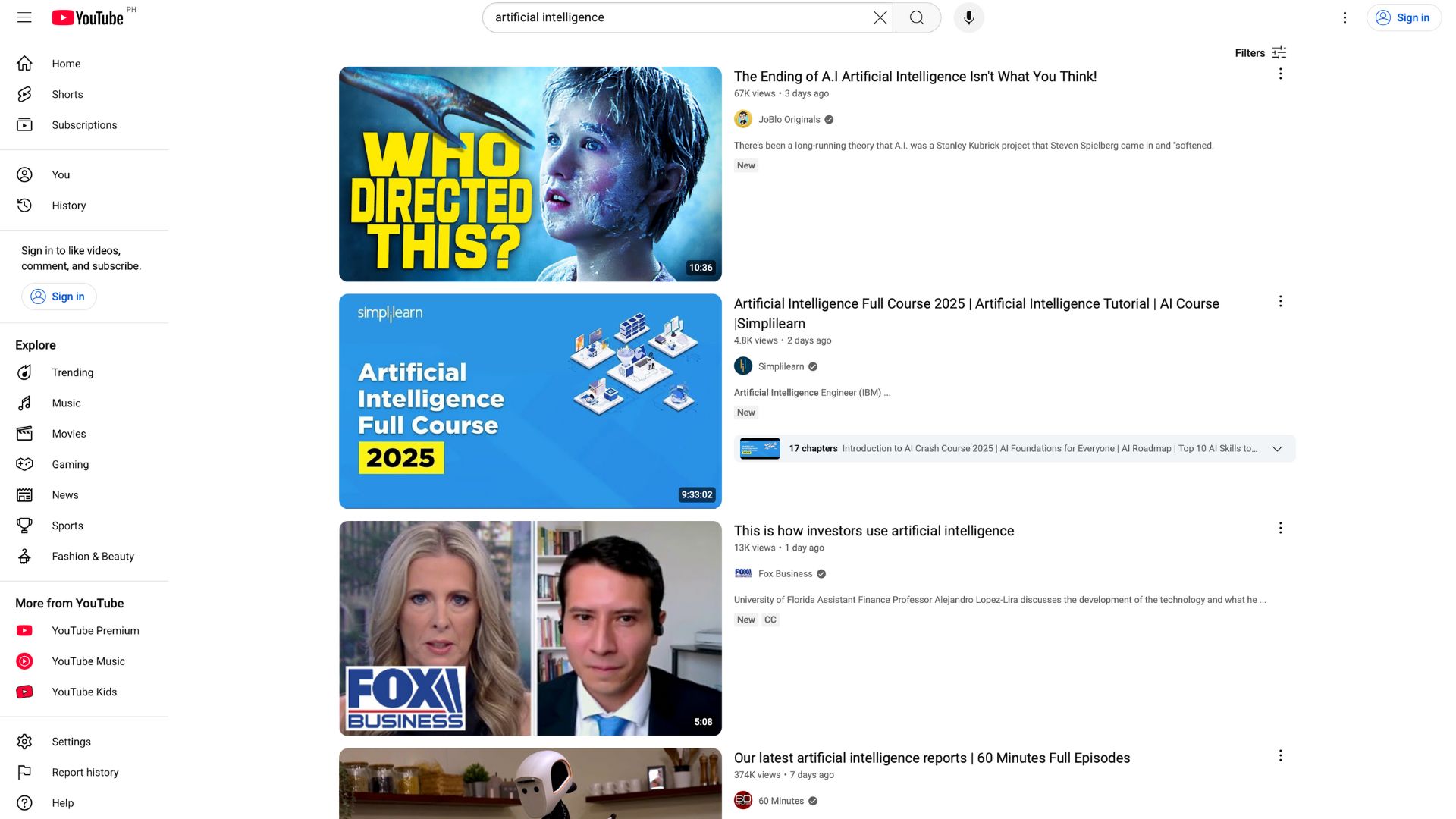
YouTube continues to dominate the online video space with its robust feature set, massive global reach, and creator-first monetization tools. It’s equally beneficial for individuals looking to learn or be entertained, as it is for creators, businesses, and educators aiming to share or profit from their content.
Despite a few caveats—like ad overload and occasional frustrations with the algorithm—it remains the most complete video platform on the market.
For creators, brands, or viewers exploring the full potential of online video, YouTube is not just an option—it’s the standard.
Ready to start uploading or discover your next favorite video? Visit YouTube.com and explore what’s possible.
Media
YouTube is now on EASY Mode (Anyone Can Blow Up in 2025)
How YouTube’s algorithm ACTUALLY works (according to YouTube!) | YouTube algorithm 2025
How To Start a SUCCESSFUL YouTube Channel For Beginners in 2025 (step by step)